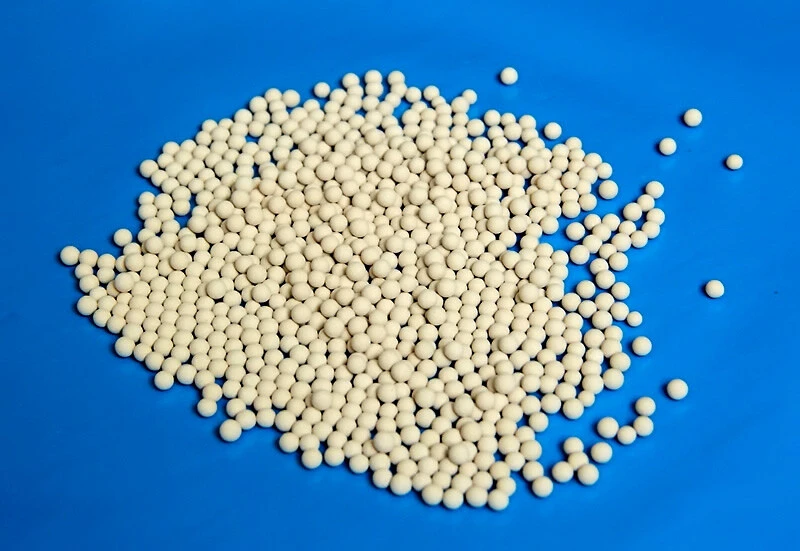
All molecular sieves look similar: small beige beads that dry things. But behind the uniform appearance are four distinct pore systems - 3A, 4A, 5A and 13X - each with a specific job. Buying the wrong grade means wasted capacity, contaminated product or failed dew point performance.
The Four Standard Grades
- 3A (K-A zeolite): pore 3Å, admits only water. Best for ethanol dehydration, insulating glass, refrigerant and solvent drying where co-adsorption of organics must be avoided.
- 4A (Na-A): pore 4Å, the general-purpose workhorse for natural gas, LPG and solvent dehydration, also removing CO₂ and H₂S.
- 5A (Ca-A): pore 5Å, adsorbs normal paraffins and CO₂; the standard for PSA oxygen, natural gas sweetening and linear paraffin separation.
- 13X (Na-X): pore 10Å, highest capacity for water and CO₂; preferred for medical oxygen concentrators and deepest drying.
Selecting by Duty
| Application | Recommended Grade |
|---|---|
| Insulating glass | 3A (IG grade) |
| Ethanol / solvent dehydration | 3A |
| Natural gas dehydration | 4A |
| Natural gas sweetening | 5A or 13X |
| Medical / industrial PSA oxygen | 13X (oxygen grade) |
| Refrigerant drying | 3A |
Form Factor: Beads, Pellets or Powder
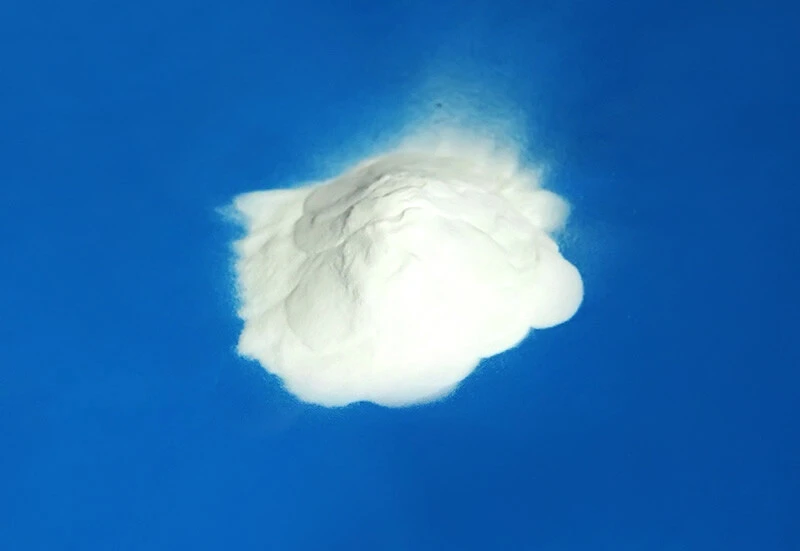
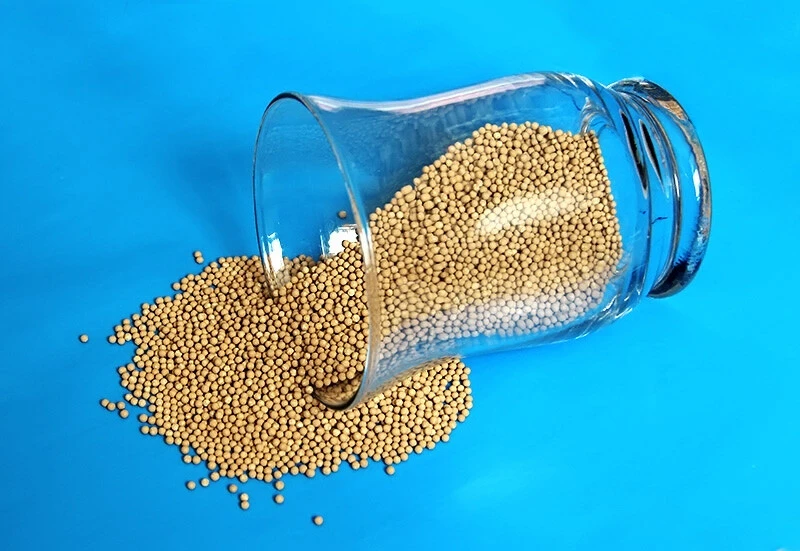
Beads suit most packed-bed duties with lower pressure drop. Pellets pack more densely where size is limited. Powder (0-5 μm) is blended into coatings, adhesives and desiccant panels. Select form after confirming the vessel geometry and allowable pressure drop.
Quality Checks Before Buying
Verify the certificate of analysis for water adsorption at 60% RH, crush strength, dust content and bulk density. Ask for a specification matching the application - a desiccant for ethanol and a grade for oxygen concentrators are different products with different quality targets.
Our sieve range covers all four grades in beads, pellets and activated powder. Tell us your process and target dew point, and we will confirm the right grade and size.

Comments (0)
No comments yet. Be the first to share your thoughts.
Leave a Comment