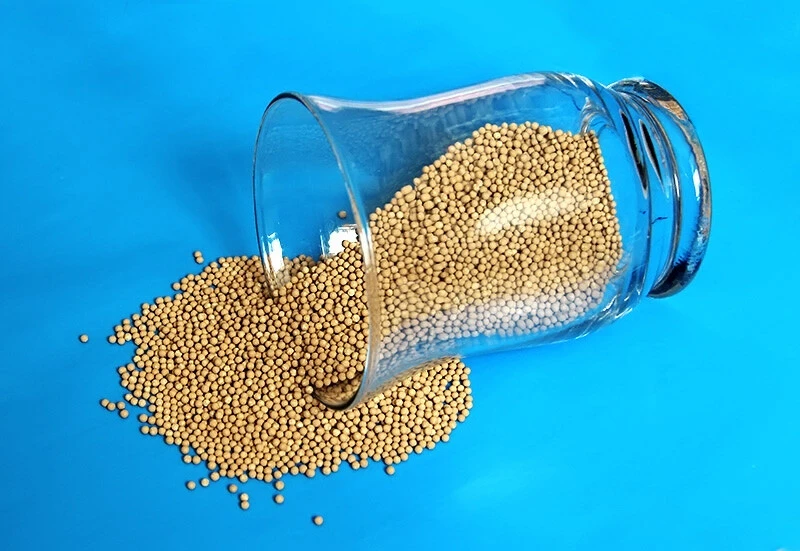
Fogged windows are the most common failure mode of insulating glass units (IGUs). Once moisture condenses between the panes, the unit must be replaced. The reason modern windows stay clear for decades is a handful of molecular sieve beads hidden inside the spacer frame.
Why Insulating Glass Needs a Desiccant
Sealed glass units trap a volume of dry air or argon between the panes. No seal is perfect, and trace moisture slowly diffuses through the edge seal over the life of the window. When outside temperature falls, that moisture condenses on the cold interior surface of the outer pane, producing the familiar fog layer.
Why 3A Molecular Sieve Is the Standard Choice
Three properties make 3A molecular sieve the industry standard for insulating glass:
- Pore selectivity: the 3Å pore admits water molecules only. Argon and air molecules, which are larger, are never co-adsorbed, preserving the insulating gas fill that determines thermal performance.
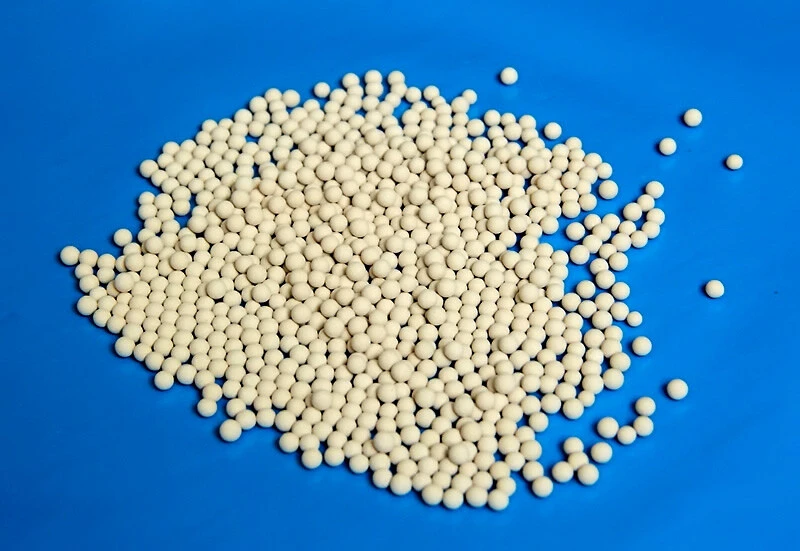
- Low dust: crack-free beads generate almost no dust, so the glass cavity stays haze-free even after years of thermal cycling.
- Dew point control: a properly sized 3A charge holds the cavity dew point below -40°C, far below any practical condensation temperature.
How Much Sieve Is Needed?
Sizing depends on the seal, the cavity volume and the expected moisture load. A common design basis is filling roughly 60-80% of the spacer channel volume. Undersized charges allow condensation early in the window life; oversized charges can pressurize the unit during desorption at high ambient temperature.
The Cost of Getting It Wrong
An IG unit that fogs must be replaced entirely - an expensive and wasteful failure. Using a low-grade desiccant to save a fraction of a percent on unit cost can trigger warranty claims years later. Certification to EN 1279 and ASTM E1887 provides independent verification of desiccant performance.
At Zibo Yingchuan we supply IG-grade 3A molecular sieve verified for crack-free performance, ultra-low dust and stable long-term capacity. Contact us for technical datasheets and desiccant quantity recommendations.


Comments (0)
No comments yet. Be the first to share your thoughts.
Leave a Comment