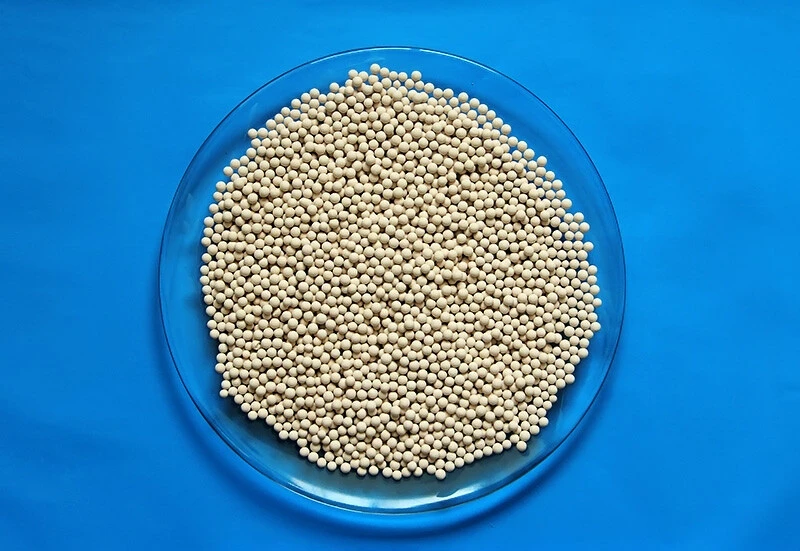
Ethanol distillation alone stops at the azeotrope of about 95.6% purity - useful for beverages but insufficient for fuel. Reaching the 99%+ purity required for E100 or blending demands removing that last water, and 3A molecular sieves do it with exceptional selectivity.
The Azeotrope Problem
Water and ethanol form an azeotrope at roughly 95.6% ethanol. Simply distilling harder cannot cross this barrier. Options include azeotropic distillation with entrainers, membrane pervaporation, and the modern standard: adsorption with 3A molecular sieve.
Why 3A Works for Ethanol
The ethanol molecule is about 4.4Å across, while water is about 2.7Å. The 3Å pore of 3A molecular sieve admits water but physically excludes ethanol. This size exclusion delivers three decisive advantages:
- Zero product loss: ethanol is not co-adsorbed, so every molecule stays in the product.
- Deep dehydration: water levels fall below 1,000 ppm, meeting fuel-grade specifications.
- Long life: because organics do not foul the pores, the sieve retains capacity for years.
The PSA Process
Most ethanol plants use a pressure swing adsorption (PSA) design. Near-azeotropic vapor at elevated pressure passes over the sieve bed; water is adsorbed and dry ethanol product exits. The saturated bed is regenerated by pressure release and purged with a slipstream of dry product, returning the sieve to service. Two or three beds alternate to maintain continuous production.
Choosing the Right 3A Grade
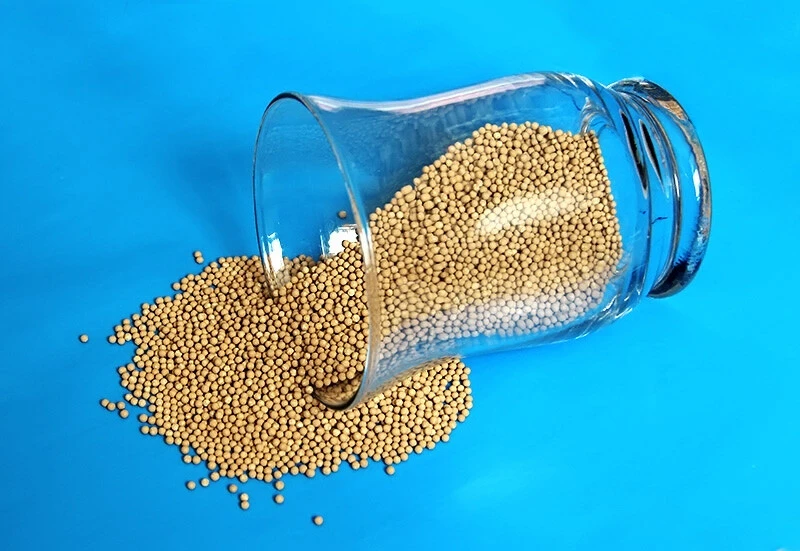
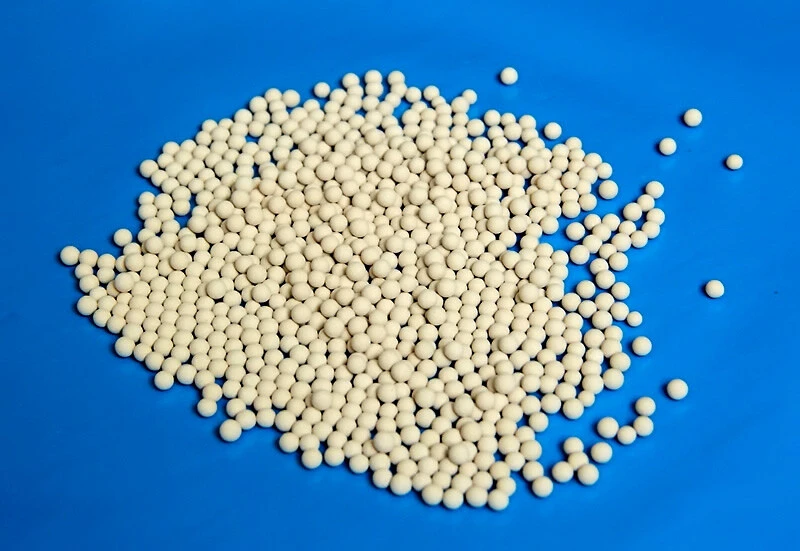
Key specifications for ethanol duty are high water capacity (above 19.5% at 60% RH), high crush strength for packed-bed service, and low dust to protect downstream condensers. Bead size affects pressure drop: 1.6-2.5mm for smaller units, 3-5mm for high-throughput plants.
Our 3A molecular sieve is used in ethanol plants worldwide. Contact us for a grade recommendation and adsorption curve for your dehydration capacity.

Comments (0)
No comments yet. Be the first to share your thoughts.
Leave a Comment