Raw natural gas leaving the wellhead is saturated with water and contaminated with carbon dioxide, hydrogen sulfide and mercaptans. If not removed, this mixture forms solid gas hydrates that block pipelines, and the acidic gases corrode equipment and poison downstream catalysts.
Dehydration: Removing Water Before It Freezes
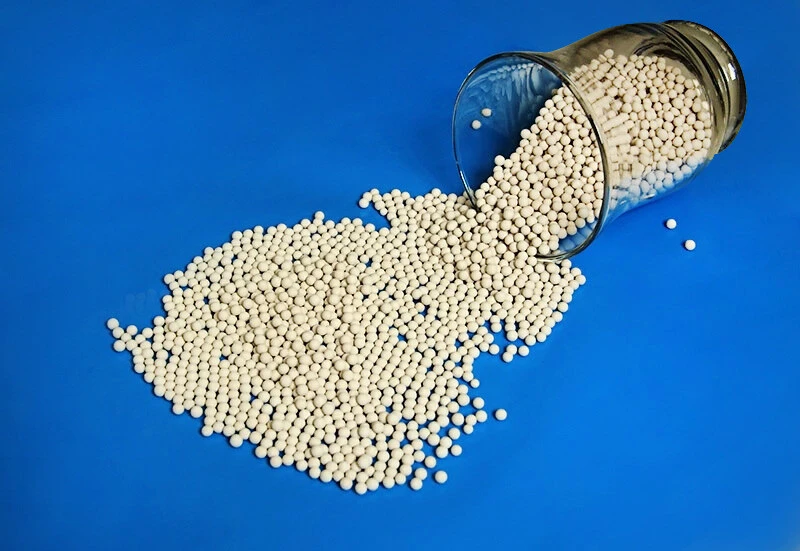
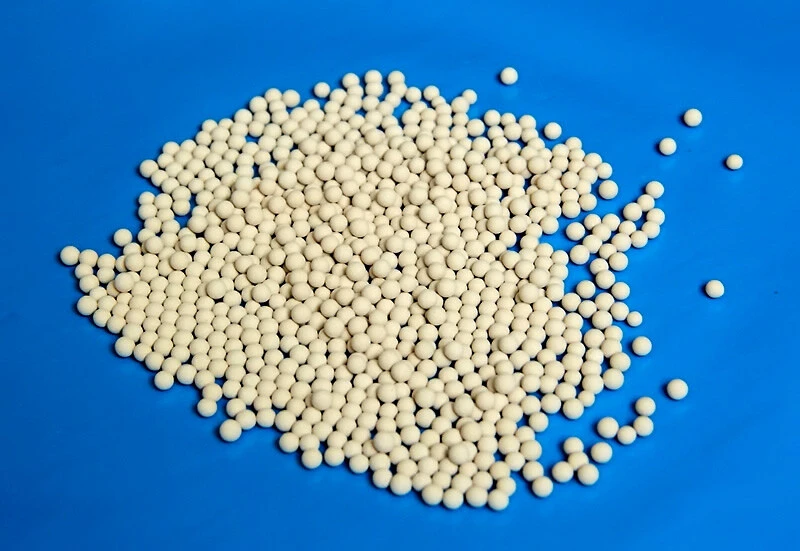
Water removal is achieved with dry-bed adsorption towers packed with molecular sieve, typically 4A for general dehydration. At pressures up to 100 bar, molecular sieve achieves pipeline specification of 7 lb water per MMSCF or better - a target that glycol units cannot reliably meet. Twin towers alternate duty: one on adsorption while the other regenerates with hot dry gas.
Sweetening: Removing H₂S and CO₂
For simultaneous dehydration and sweetening, 5A and 13X molecular sieves co-adsorb water, H₂S, CO₂ and mercaptans. The choice depends on the contaminants present:
- 5A: removes H₂S, CO₂ and mercaptans, with selectivity suited to sour gas with moderate contaminant levels.
- 13X: highest capacity for CO₂ and larger sulfur molecules; preferred where CO₂ content is high.
Guard Beds and Layered Designs
Many units layer a guard bed of activated alumina or a sacrificial sieve layer beneath the main sieve charge. The guard layer handles slugs of liquid water and heavy hydrocarbons that would otherwise damage the expensive sieve, extending bed life and preventing pressure-drop problems.
Operating Pitfalls
- Liquid carryover into the sieve bed, causing bead cracking and channeling
- Regeneration gas too wet, leaving the bed partially saturated
- Insufficient regeneration temperature, permanently fouling the sieve with heavy hydrocarbons
From wellhead to city gate, molecular sieves protect gas infrastructure. Contact us to select the right sieve grade and size for your dehydration or sweetening unit.


Comments (0)
No comments yet. Be the first to share your thoughts.
Leave a Comment